The Definitive Guide to Spanish Articles and Noun Gender (el, la, los, las)
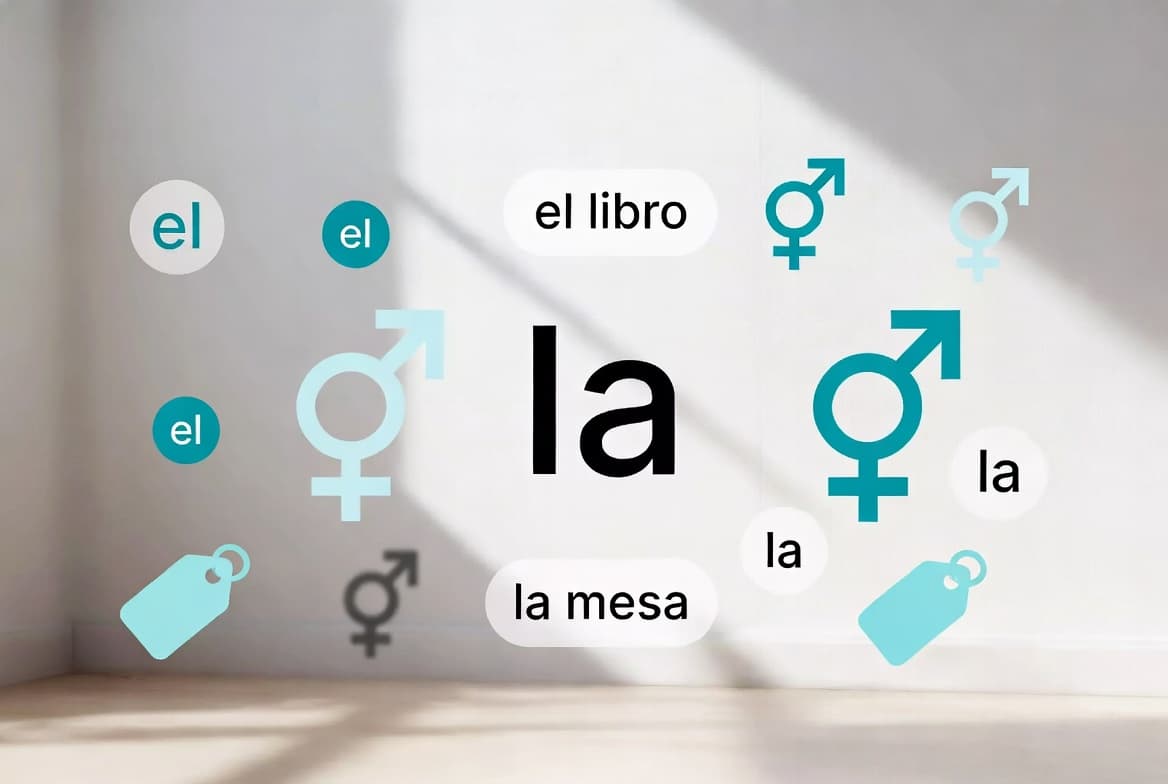
One of the first big challenges for English speakers is understanding how articles and gender work in Spanish. Unlike English, almost every noun in Spanish has a gender (masculine or feminine), and the article must agree with it.
This complete guide covers all the rules, exceptions, tricks, and common mistakes.
1. The Four Spanish Articles
| Gender & Number | Definite Article | Indefinite Article |
|---|---|---|
| Masculine Singular | el | un |
| Feminine Singular | la | una |
| Masculine Plural | los | unos |
| Feminine Plural | las | unas |
Examples:
- El coche (the car) → Un coche (a car)
- La casa (the house) → Una casa (a house)
- Los libros (the books) → Unos libros (some books)
- Las mesas (the tables) → Unas mesas (some tables)
2. Noun Gender Rules (The Most Useful Ones)
Masculine Nouns (usually)
- Words ending in -o: el libro, el perro, el tiempo
- Days of the week: el lunes, el viernes
- Numbers: el dos, el cien
- Colors: el rojo, el azul
- Most words ending in -or, -aje, -ambre: el amor, el viaje, el hambre (exception)
Feminine Nouns (usually)
- Words ending in -a: la casa, la mesa, la niña
- Words ending in -ción, -sión, -dad, -tad, -ud: la nación, la felicidad, la juventud
- Most letters of the alphabet: la a, la e, la o
3. Important Exceptions & Tricks
- El agua (feminine noun but uses "el" for pronunciation)
- El hambre (feminine)
- La mano (feminine)
- El día (masculine)
- La radio (feminine) vs el radio (masculine = radius)
Trick: When a feminine noun starts with a stressed a or ha, we use el instead of la to make it easier to pronounce (el agua, el hacha).
4. Common Mistakes English Speakers Make
- Saying la coche instead of el coche
- Saying el casa instead of la casa
- Forgetting to make adjectives agree: el casa rojo → la casa roja
5. Practice Exercises
Complete with the correct article (el, la, los, las, un, una, unos, unas):
- _____ casa es muy grande.
- Quiero comprar _____ coche nuevo.
- _____ libros están en la mesa.
- ¿Dónde está _____ estación de tren?
- Me gusta mucho _____ agua fría.
- _____ niños juegan en el parque.
- Necesito _____ mano para abrir esto.
- _____ día de hoy es perfecto.
Answers at the bottom of the article.
Answers
- La
- un
- Los
- la
- el
- Los
- una
- El
Continue lendo
Shadowing in Spanish: How to Improve Your Pronunciation, Listening & Fluency Fast (Step-by-Step Guide)
Struggling to sound natural in Spanish or understand fast speech? Discover the shadowing technique used by interpreters and successful learners. Step-by-step guide + best resources for 2026 + how to combine it with Bocabla for faster results.

Bocabla is now live on Product Hunt 🚀
Bocabla: Master Spanish is now live on Product Hunt! Learn Spanish smarter with Smart Review (FSRS), achieving 88%+ retention with 20-30% less effort. Designed specifically for English speakers who want real conversational fluency.
Spanish Food & Restaurant Vocabulary: 50+ Essential Words and Phrases
Master Spanish food vocabulary with this fun storytelling guide. Learn 50+ words and phrases to order confidently, understand menus, and enjoy restaurants like a local in Spain and Latin America.